
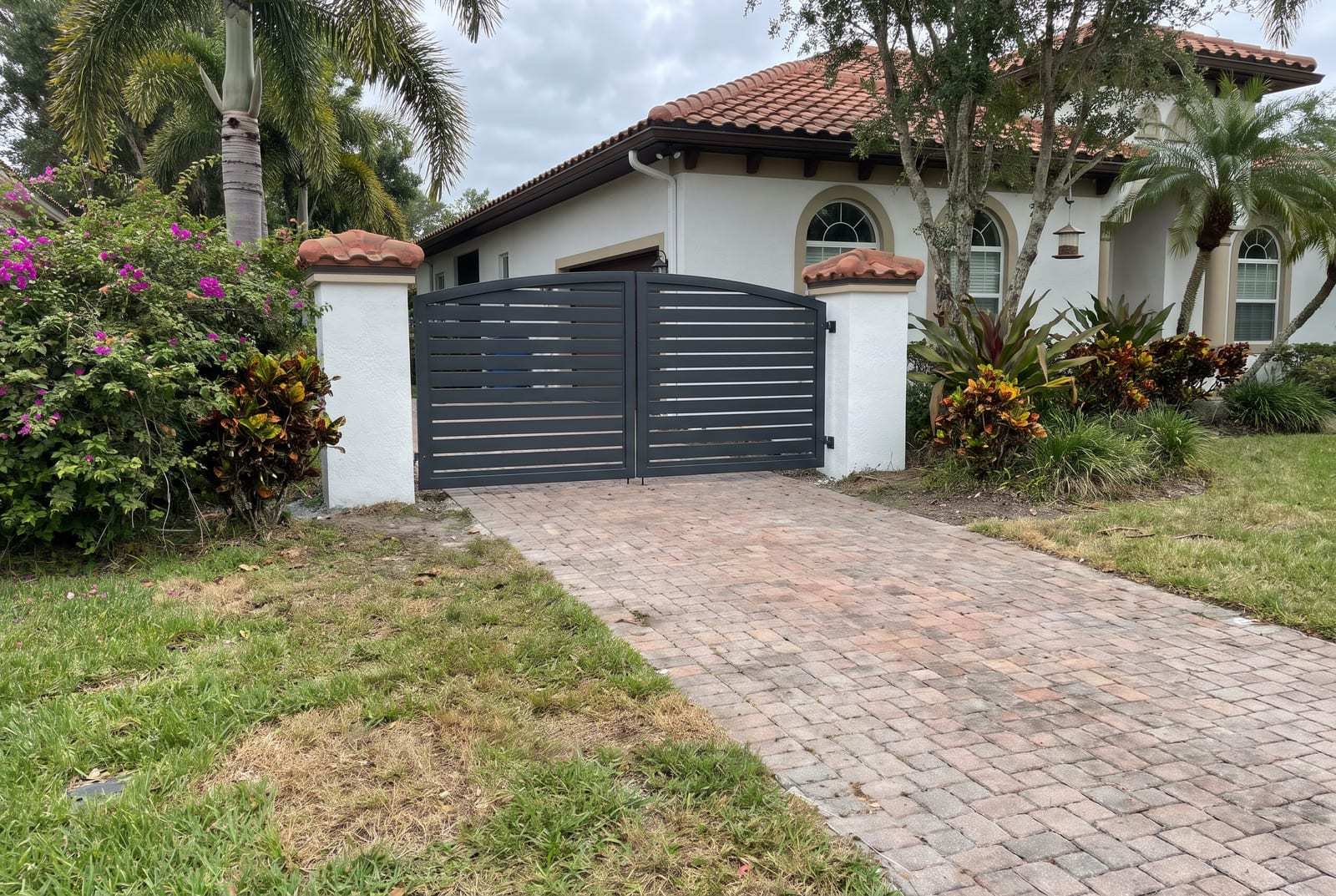
Gate Installation in Orlando
New gates in aluminum, steel and wood, sized to the opening and set on posts that stay plumb.
A new gate is mostly decided before the first hole is dug. The width of the opening, the slope of the drive, where power can come from and how the gate will be used all point toward one style and away from others. We install new gates in aluminum, steel and wood for homes, rental properties, managed entries and small business lots around Orlando, Winter Park and Kissimmee.
Most of what goes wrong with a gate later starts low, at the post. A post a few degrees out of plumb lets the leaf drop, the latch miss and the operator strain on every cycle. That is why the footing, the post and the hinges matter as much as the look of the gate itself.
Swing, Sliding, Cantilever or Barrier Arm
Four styles cover nearly every driveway and lot entry. They differ most in how much room they need beside or behind the opening, and in how they cope with a slope.
| Style | Suited to | Space needed | Common materials |
|---|---|---|---|
| Swing gate | Level drives with room behind the opening, and walk gates beside a drive | A clear arc inside the property as deep as each leaf is long, plus room for an operator arm | Aluminum, steel, or wood on a steel frame |
| Sliding gate | Wide openings and drives that rise behind the gate | A straight, level run beside the opening at least as long as the gate, with a V-track across the drive | Steel or aluminum |
| Cantilever gate | Openings where a ground track would fill with sand or leaves, and busy commercial lots | A run beside the opening about one and a half times its width, with no track across the drive | Steel or aluminum, kept as light as the job allows for the carriages |
| Barrier arm | Parking entries and lot lanes where cars, not people on foot, need controlling | A small pad for the cabinet beside the lane and clear height for the arm | An aluminum arm on a steel cabinet |
The trade-offs are plain. A swing gate is simple and quiet, but it needs room to open and struggles on a drive that climbs behind it. A sliding gate handles slopes and wide openings, but its track has to stay clean and level. A cantilever gate keeps the drive clear of any track, but it needs more room to the side and a longer gate. A barrier arm moves cars in and out quickly but keeps nobody out on foot.
Aluminum, Steel and Wood
Aluminum is light and does not rust, which keeps the hinges, the rollers and any operator working with less strain. It dents more easily than steel and suits most residential drives and walk gates.
Steel is stronger and heavier, and it takes ornamental work such as scrolls, arched rails and spear points. In Orlando’s humid summers, a chip in the coating lets rust start, so a steel gate needs its paint or powder coat kept sound.
Wood gives privacy and a warm look, usually as boards on a steel frame so the leaf stays square. It gains weight as it takes on moisture, and a solid privacy panel catches the wind, which matters in the June to November hurricane season.
Decisions to Make Before Installing
A short list of decisions shapes the whole gate. It helps to have a view on each one before the visit, even a rough one.
- Purpose. Privacy, security, keeping a dog or children in, or a finished look from the street: the purpose sets the height, how open the pickets are and how the gate latches.
- Width. Measure the opening post to post or wall to wall, and remember that a car turning in from the street needs more room than the drive suggests.
- Driveway slope. A drive that rises behind the gate can stop a swing leaf partway, which often points to a sliding gate or a leaf built to clear the grade.
- Power access. An automatic gate needs 120 V nearby, a low-voltage cable from the house or a solar panel in good sun, and a conduit under the drive is easiest to lay before the paving goes down.
- Manual or automatic. A gate that may take an operator later needs posts, hinges and a frame strong enough for it from the start.
- Community or HOA rules. Many planned communities set rules on gate height, color and style, and some want approval before any work starts.
Posts, Footings and Hinges
The post carries the gate. On a swing gate, the hinge post takes the leaf’s weight as a constant sideways pull, and a post set shallow in Central Florida’s sandy soil can lean a little each year until the leaf drags. A deep concrete footing and a post sized to the leaf keep it plumb. An installer usually lets the concrete cure before hanging a heavy leaf, so the post does not move under its first swings.
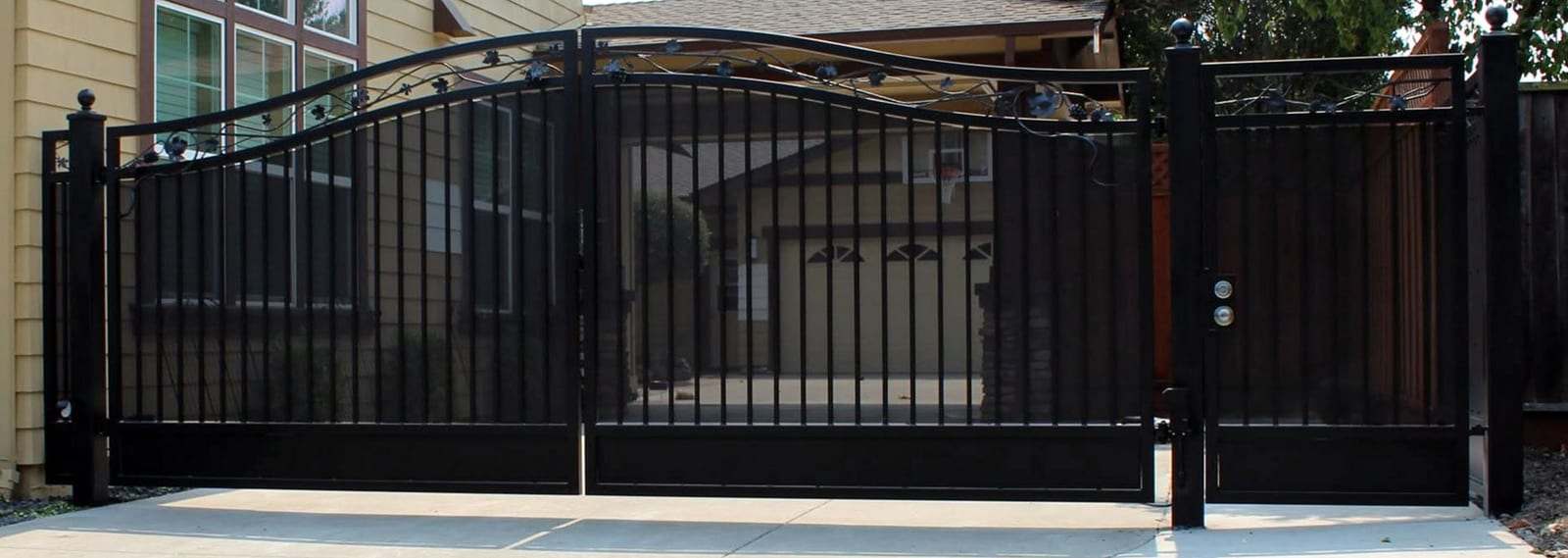
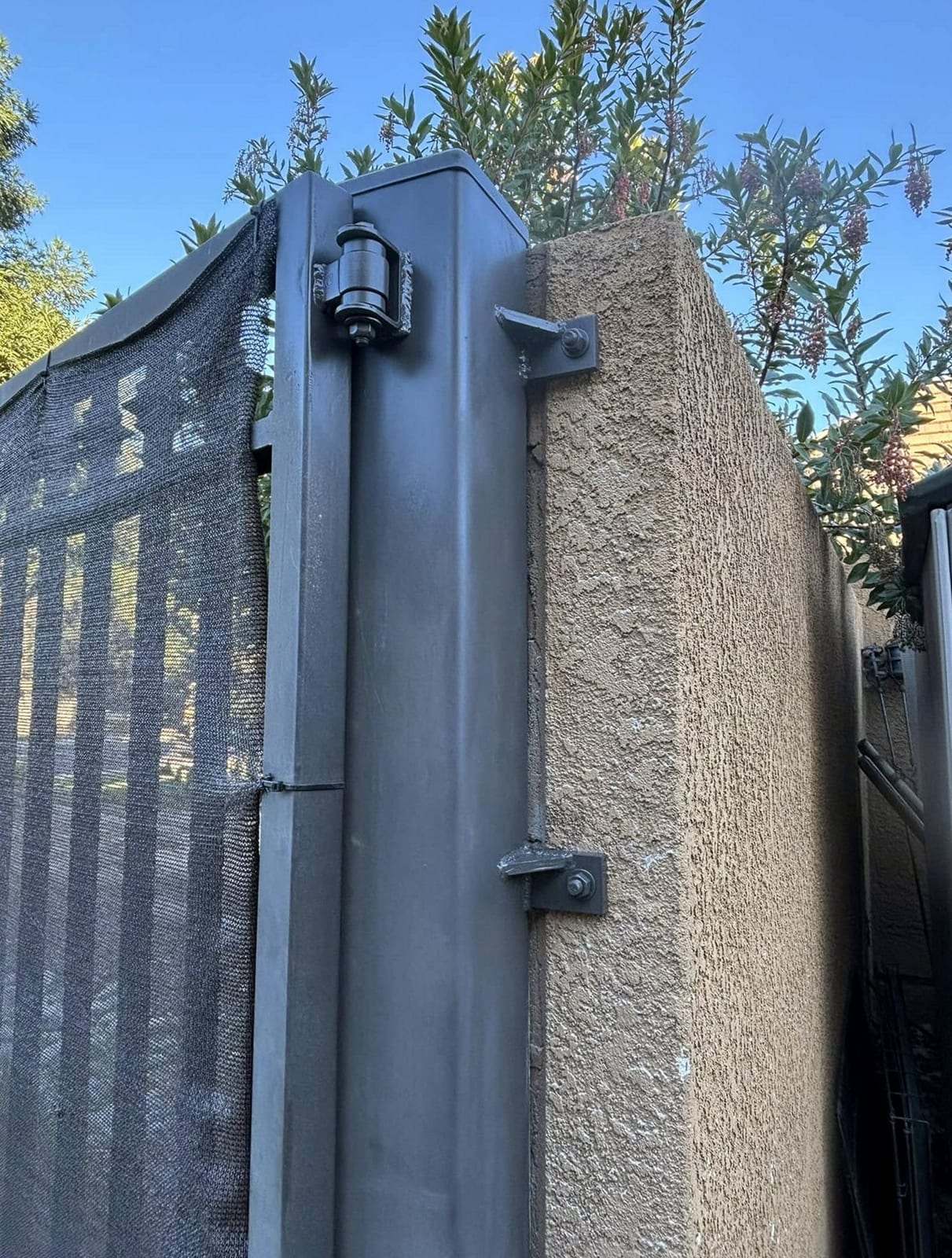
Hinges come next. Heavy weld-on barrel hinges with an adjustable pin let the leaf be raised or squared as it settles, without taking it down. A walk gate beside the drive needs the same care, since its latch and lock line up only while the post and the leaf stay true.
On a sliding gate, the same job falls to the track and the wheels: a V-track set level and straight in its own concrete, and V-groove wheels sized to the weight of the gate. A cantilever gate rides in carriages bolted to two posts beside the opening, and those posts have to stand exactly in line, or the gate binds as it rolls.
Building a Gate That Can Take an Opener
If the gate may be automated, now or in a few years, it is worth planning for at the start. A conduit laid under the drive before the paving, a post or pier with room for an operator, and a frame stiff enough to be pushed from one point all save digging things up later. The different kinds of gate openers push a leaf in different ways, and the gate has to suit the one it will carry. An automatic gate also needs a separate walk gate for people on foot, which is easier to place when the whole entry is planned together.
Planning a New Gate
Send the address, the width of the opening and the style you have in mind, and we will arrange a time to look at the site.