
Gate Maintenance in Orlando
Hinges, rollers, sensors and settings looked over while the wear is still small.
A gate is a heavy panel hung on two hinges or carried on a few rollers, and an automatic gate adds a motor, a control board and the sensors that keep it from closing on anyone. Most of that works out of sight until something slips: a hinge pin wears, a roller develops a flat spot, a photo eye gets bumped out of line. Maintenance is the routine look that finds those things while they are still small adjustments.
The parts involved are the same ones behind most of our hinge and roller repair and safety sensor adjustment work. Meeting them on a planned visit is easier than meeting them on the day the gate stops halfway across the drive.
What Orlando Weather Does to a Gate
Central Florida is hard on outdoor machinery in its own way. Summer brings an afternoon storm most days, with rain driven into control boxes and lightning that can damage a board or a keypad without a direct strike. Sandy soil washes into ground tracks and around footings, and a post set too shallow starts to lean. Growth is quick: vines climb hinges, shrubs crowd photo eyes, and an irrigation head aimed at the hedge often soaks the operator as well. Lawn crews add their share, blowing sand into the track and nicking sensor wires with a trimmer.
None of this is a reason to worry about a gate that works today. It is a reason to look at it on purpose, rather than waiting for it to fail.
What a Maintenance Visit Looks At
On most gates the check runs from the ground up, roughly in this order.
| Component | Typical check | Sign of wear |
|---|---|---|
| Hinges and rollers | The leaf lifted at the latch end to feel for play; rollers turned by hand and watched for wobble | A leaf that drops as it closes, a hinge pin worn oval, a roller with a flat spot |
| Tracks | The V-track or ground track checked for dents, packed sand and loose anchors; cantilever carriages checked for alignment | The gate jumps, grinds or hesitates at the same spot every time |
| Operator | Mounting brackets, arm pivots and the gearbox checked for looseness, rust and leaks | A clunk as travel starts, an arm that flexes, a motor that hums before it moves |
| Safety sensors | Photo eyes tested by breaking the beam during travel; edge sensors pressed against the moving gate | The gate reverses for no reason, or carries on when the beam is blocked |
| Limit settings | The open and closed positions compared with the stops and the latch | The gate stops short, bangs into its stop or closes past the latch |
| Backup battery | Voltage checked under load and the gate run on the battery alone | Slow travel on battery, a warning beep, a battery that has been in service for years |
| Lubrication | Hinges, pivots and drive chains greased where the maker calls for it; tracks and nylon rollers kept dry and clean | Squeaks, dry or gritty grease, a chain that sags between its sprockets |
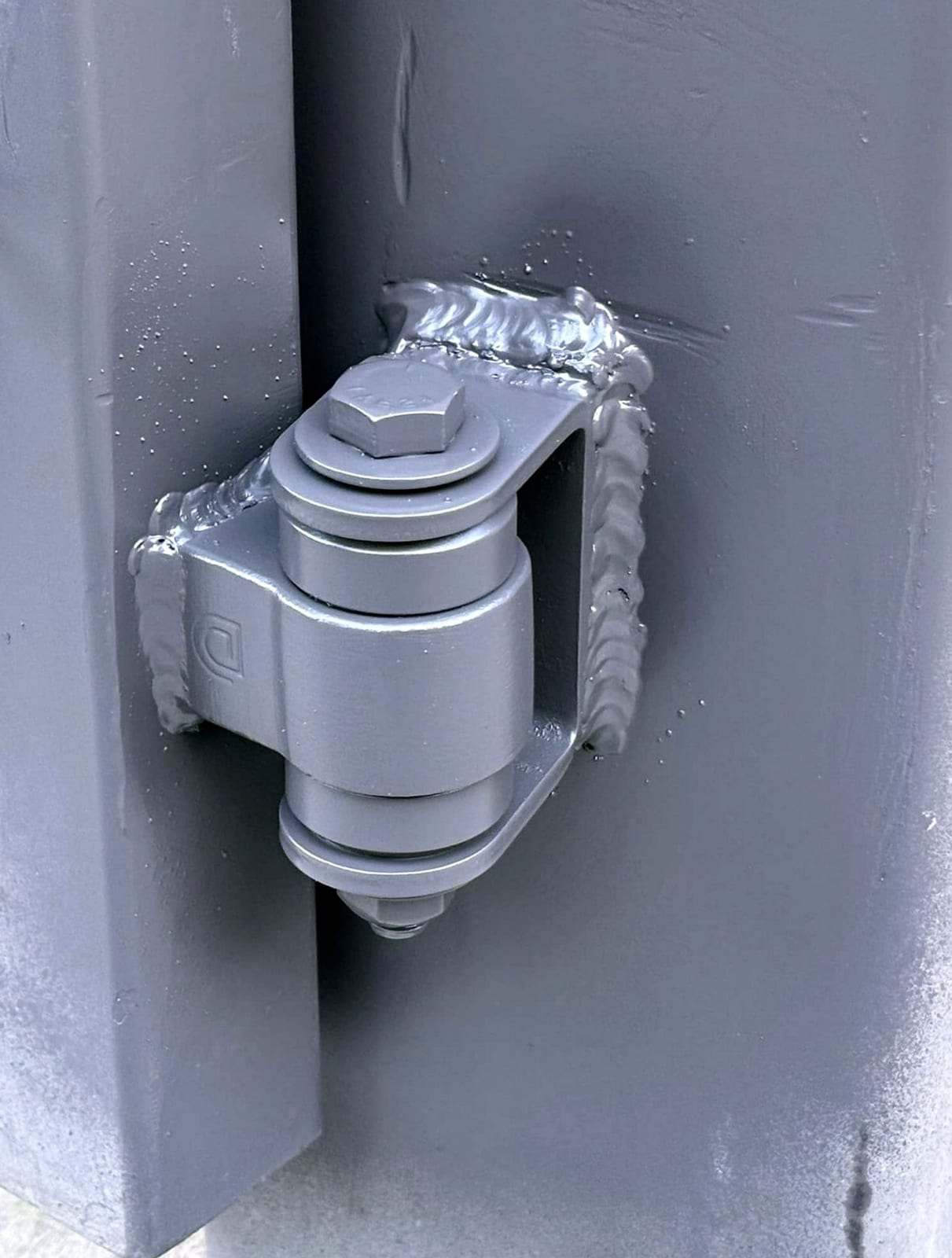
Hinges carry the whole weight of a swing leaf, and the upper hinge works hardest, pulled outward every time the leaf moves. An adjustable barrel hinge has a threaded pin and a nut that let the leaf be raised a little as the parts wear, which can bring a sagging gate back to its latch without new hardware.
Once a pin is worn oval or the weld that holds a hinge to its post has cracked, adjustment no longer holds, and the hinge or the post needs work. Catching that early also spares the operator, which otherwise strains to push a dragging leaf on every cycle.
Slide and Cantilever Gates Need Clean Running Gear
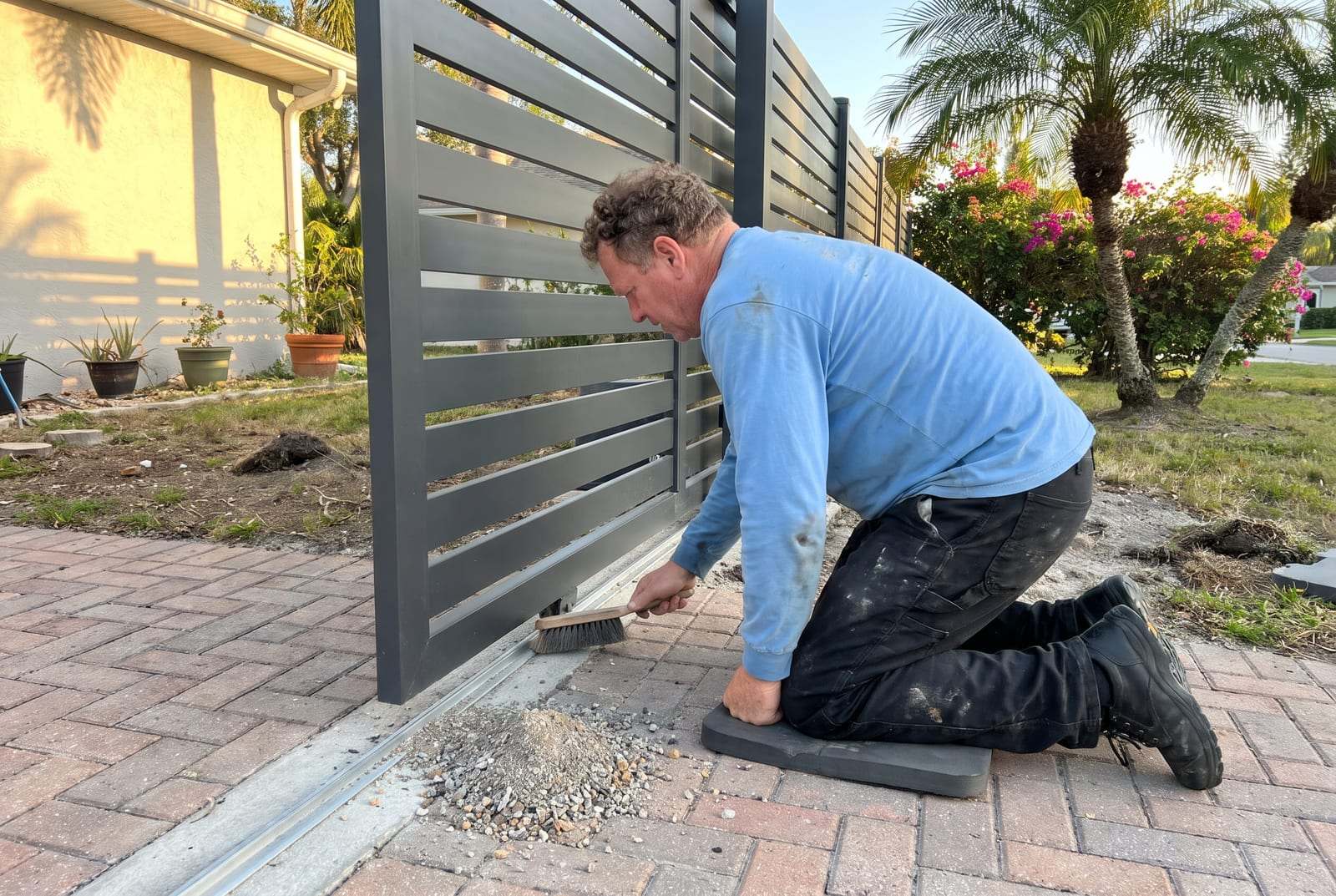
A slide gate on a V-track rides on grooved wheels that sit on an angle-iron rail at the ground. Sand, leaves and grass clippings collect along that rail, and a wheel that climbs over debris lifts the gate, loads the operator and wears its own bearings. Keeping the track swept and checking that the wheels turn cleanly is the simplest upkeep a slide gate gets, and one of the most useful.
A cantilever gate has no ground track. It hangs from carriages with sealed rollers mounted on posts beside the opening, so those carriages need to stay aligned and their bolts tight, and the guide rollers at the far end should catch the gate without forcing it. On either kind, the gear rack or chain the operator drives should mesh evenly along its whole length.
Monthly Things an Owner Can Watch For
Between visits, a minute of attention once a month catches most problems early. Watch and listen, and leave the operator cover and the control box closed.
- Noises. Grinding, squealing or a sharp clunk at either end of travel usually points to a dry hinge, a worn roller or a loose bracket.
- Slow travel. A gate that takes longer to open than it used to may be dragging, fighting a stiff hinge or running on a tired battery.
- Uneven movement. Jerks, a bounce at the stop, or one leaf of a pair trailing the other suggest a limit or a mechanical problem worth reporting.
- Sensor alignment. Many photo eyes have a small indicator light that shows when the pair can see each other. Check that it is lit, the lenses are clean and nothing has grown into the beam.
- The latch and the gap. If the latch no longer lines up with its keeper, or the gap under a leaf has changed, the gate has sagged or a post has moved.
- The path of the gate. Sand, mulch, toys and sprinkler heads in the run of a slide gate or the swing of a leaf should be cleared away.
If something changes suddenly, such as a gate that reverses for no reason or will not stop, take it off automatic, use it by hand only if it moves easily once released, and keep people and cars clear until it has been looked at.
How Often a Gate Should Be Looked Over
It depends on how hard the gate works. A home gate that opens a few times a day is often looked over once or twice a year. A gate at a rental, a shared driveway or a business lot runs far more cycles and is usually checked more often. In Orlando, late spring is a sensible time for a look, before the hurricane season opens in June and the daily storms set in, so the battery, the sensors and the post anchors are known to be sound.
A new gate also benefits from a check after its first months of use, once the posts have settled and the hinges have bedded in. Booking one works like any other visit in Our Process: the address, a few words about the gate, and a time to look at it.
When Upkeep Becomes a Repair
Maintenance has limits. A bent frame, a cracked weld, a post that has moved in the ground or an operator that has burned out are repairs, not adjustments, and they fall under gate repair. Often the two meet on the same visit: a check turns up a worn roller or a weak battery, and the choice is between replacing it now and planning for it later.
Catch the Wear While It Is Small
Call or send a request with the address, the kind of gate and roughly how often it runs.